Showing posts with label Monster Month. Show all posts

Tuesday, October 31, 2017

Creature of the Black Lagoon (1954)


Happy Monster Month.

'Creature of the Black Lagoon.'  This is very special movie for me.  One, because I was at Wakulla Springs Florida (where portions of 'Black Lagoon' was filmed) when I was seven or eight years old.  Two, this is the first monster movie I saw (excluding the '33 King Kong) when I was about 16 or 17, and that kicked off my classic monster movie obsession.


As it was my first monster movie, I didn't know at the time just how impressive the Gill-Man costume was.  The two actors portraying the creature (Ben Chapman on land, Ricou Browning underwater) were covered head to toe in rubber, yet moved naturally.  The Creature moves gracefully underwater, and when he's on land gasping for breath you can see his gills moving as well.  Compare with the Ro-Man costume from 1953's 'Robot Monster' released just one year prior to 'Black Lagoon.'

Yeah, no contest, right?

'Creature from the Black Lagoon' is less a monster movie, and more an adventure movie that happens to have a monster in it.  It begins with geologist Carl Maia's discovery of a fossilized webbed hand belonging to an undiscovered creature in a rock deposit deep in the Amazon jungle.  He returns to civilization to assemble a team of scientists in the hope of discovering the rest of the creature's skeleton.

The newly assembled expedition includes Ichthyologist David Reed (played by Richard Carlson) his girlfriend Kay (Julie Adams) and their boss Mark Williams (Richard Denning).  Fans of classic Mystery shows may recognize Richard Denning as the male half of detective duo 'Mr. and Mrs. North.'

The team of scientists theorize that the fossilized could belong to a lungfish style fish/man hybrid.  So they hire a boat and set off down the Amazon river.  David is in it for the science.  Kay is mostly just along for the ride.  Mark is very obviously coming for the money and fame that comes with discovery.

They return to Carl's base camp and discover that it's been attacked.  The two men guarding the camp have been ripped to shreds.  Amusingly, the scientist tell Kay to 'go stand over there' while they investigate.  So she's standing by the bank of the river and this webbed hand starts creeping towards her ankle.  The music is building all sinister-like, and then SHE MOVES!  The sinister music fizzles and the hand slinks back into the water in a dejected 'Aw, rats!' type way.  That's right, the Gill-Man can be foiled by taking two steps forward.  Hilarious.

So the team spends several days digging in the rock deposit where Carl first found the hand without finding anything.  Theorizing that part of the rock deposit could have broken off and washed down river.  So they follow the tributary to where it ends - the titular 'Black Lagoon'.  The scientist go searching for rock samples, and Kay decides to go swimming.  Yep, this is probably the most famous sequence in the movie.  Scratch that.  This IS the most famous sequence in the movie.  If you ask anyone on the street if they've seen 'Creature from the Black Lagoon' they'd say: "Isn't that the one where the pretty girl goes swimming with the monster?  They really should've posted some 'no swimming' signs!"

So the Gill-Man, fascinated by Kay, follows her from a distance and gets caught in the ship's fishing net.  After putting up a struggle that very nearly sinks their ship, the creature breaks free, and the scientists know they're after a big find.  Mark decides he wants to kill the creature and bring it back as a trophy, while David argues that they should leave it alive to study.  They devise a plan to drug the water and force the Gill-Man to surface.  Unfortunately the Creature is only groggy when he surfaces, and he attacks and kills one of the members of the expedition, and tries to carry off Kay before he is captured.

The cage the team built to contain the Gill-Man proves insufficient, and the creature breaks free that night.  He attacks and injures one of the crew members, but is scared off by the light from a lantern.  After an argument between David, Mark, and the Captain, the team decides to cut their losses and head for home.  But they soon discover that the Creature build a dam around the entrance of the lagoon.  They're trapped.  Mark sees this as an opportunity for one last chance to try and kill the creature, and tensions between Mark and David come to a head.  And can they stop the Gill-Man from carrying Kay off the his underwater cave?

I was big into Crypt-zoology as a kid.  I read just about everything I could get my hands on about Sasquatch lore, the Loch Ness Monster, the Yeti...
This movie really captures that feeling of heading off into the uncharted wilderness to find something that may or may not exist.  'Creature from the Black Lagoon' really taps into that romanticized idea I had as a kid of adventure and the thrill of discovery.  So, yeah, it's not so much a monster movie as it is an adventure movie with a monster in it.  But it's a GOOD adventure movie with a monster in it.

-Geekboy.

Wednesday, October 25, 2017

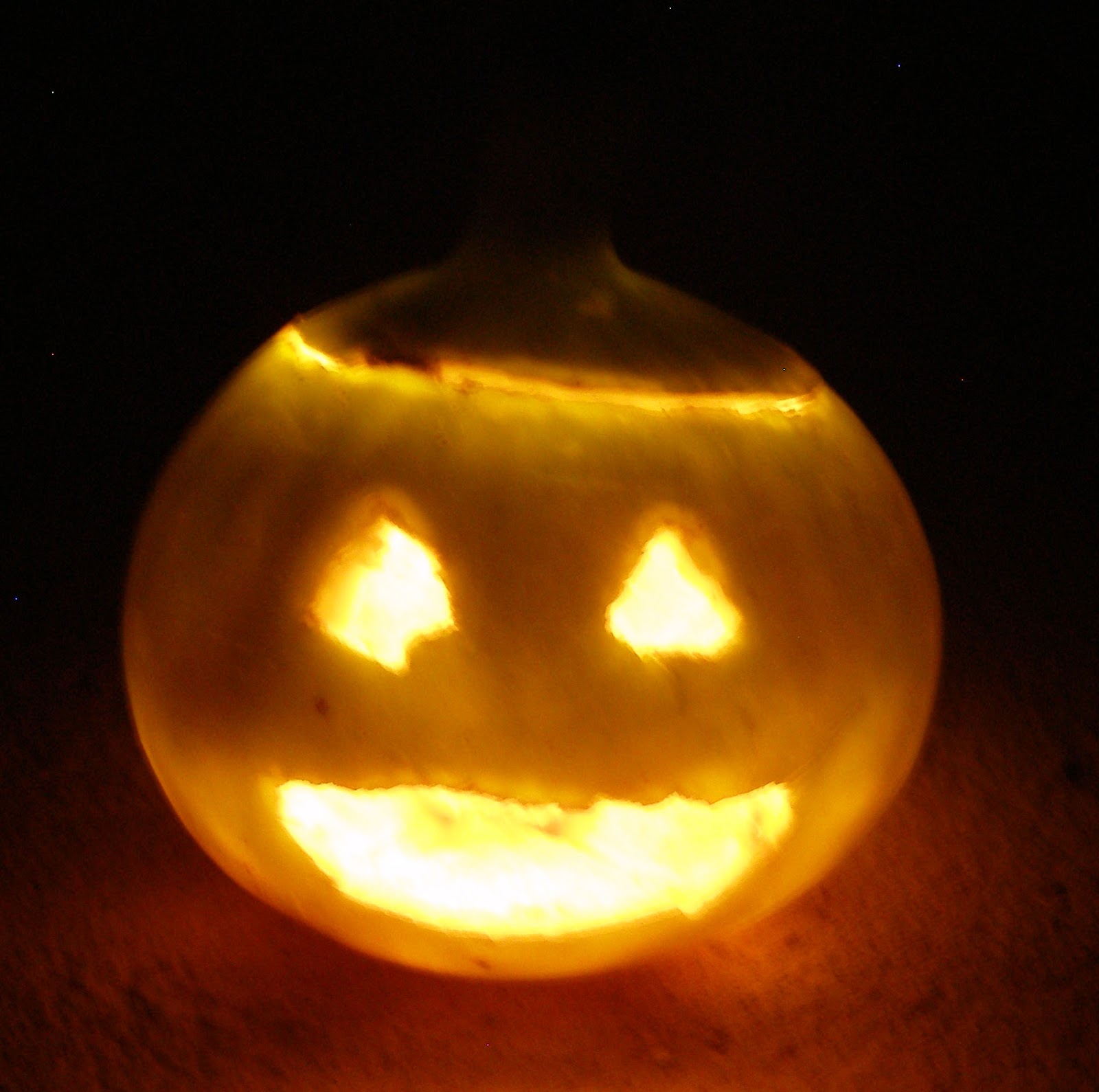
Jack 'O Lantern 2017


I decided to carve an actual pumpkin this year instead of a gourd.  I know what you're thinking:  How does one live 20+ years without making a proper Jack 'o Lantern?  Well, carving pumpkins was never a part of my childhood.  Why?  Because my mom didn't believe in growing pumpkins unless she could use them for pie.  So for my formative years the only pumpkins I really had access to looked something like this ----------------------------------- >


< ---------------- I picked this pumpkin up for a dollar at a local fruit stand while shopping for apples with my family.  I wasn't 100% sure it was big enough to suit my purposes, but I'm pretty happy with how it turned out.


-Geekboy.

Saturday, October 14, 2017

Werewolf of London (1935)


Bet you thought I forgot what month it is, didn't you?

That's right, it's MONSTER MONTH.  I've been super busy for the past couple of weeks, but I couldn't let October slip by without doing at least one classic monster review.

So here we go: Werewolf of London.  1935.  Universal Studios.  Six years before it's much more famous younger brother 'The Wolf Man'.  As a monster fan it's fascinating to watch a werewolf movie that came before the werewolf movie that all the other werewolf movies got their inspiration from.

Our story starts out in the foothills of the Himalayas.  Our protagonist is Wilfred Glendon, a British botanist questing after a rare flower that only blooms in the light of the moon.  It's natural habitat is a secluded valley that is said to be haunted.  Despite the refusal of the native guides to continue and the warnings to turn back, Wilfred pushes on to the valley.  He discovers the coveted moon flower, but is attacked by a humanoid wolf creature!  And bitten on the arm!  Oh No's!  He manages to fight off the beast and return to England with his botanical discovery.

Turns out all is not well in the Glendon household.  Wilfred is a workaholic scientist you rarely leaves his lab, and he is neglecting his wife Lisa, a socialite who keeps trying to pry her husband away from his experiments and go to fancy parties.  Even though he is busy trying to get the moon flower to bloom with artificial grow lights, he agrees to leave the lab long enough to attend a botanical society gathering.  It is here that he meets Lisa's close childhood friend, Paul, and seeds of jealousy are sown.  He also meets one Dr. Yogami, a fellow scientist who mysteriously know all about the moon flower and the werewolf who attacked Wilfred.  Warner Oland, best known as film's famed Hawaiian detective Charlie Chan, is playing Dr. Yogami here.

Dr. Yogami reveals that the moon flower is the only known antidote for werewolfism, and that he was the werewolf who attacked Wilfred in Tibet.  He begs Wilfred for a sample of the flower before the next full moon.  Wilfred doesn't seem to believe his story, but Dr. Yogami leaves him with a warning: He two will become a werewolf - and a werewolf will destroy the thing it loves the most!

Prolonged exposure to the artificial grow lights brings about a change in Wilfred.  He begins to transform!  He quickly injects himself with fluid from the moon flower, and reverses the transformation.

Lisa continues to socialize with her friends - and Paul - and Wilfred grows increasingly jealous, feeling like he is unable to participate until he has sorted out the werewolf business.  Dr. Yogami breaks into Wilfred's lab just before the full moon and steals several of the moon flowers!  Now Wilfred can no longer stave off the transformation himself!

Wilfred's first real werewolf transformation is really well. done.  after his hands transform he stumbles down a hallway lines with pillars.  As he passes each pillar his face has more and more wolf features.  This does away with the stopmotion style transformation of 'The Wolfman' where Lon Chaney moves ever so slightly between takes, causing a slightly jerky transformation.  You could easily argue that the Werewolf of London has better Werewolf makeup as well, as they don't cover actor Henry Hull's entire face in hair.  Sometimes less is more.

Wilfred dons a hat and trenchcoat and begins to stalk the streets of London.  He ends up looking more like Jack the Ripper then your typical werewolf.  He ends up attacking Lisa's socialite aunt at a house where she and her friends are having a party.  He is scared off though, but ends up committing a murder elsewhere in London.

Human Wilfred is frantically trying to get the moon flower to bloom again.  His wife begs him to go out with her and Paul that evening, and he agrees out of fear of loosing her, but backs out of it at the last minute when the flower fails to bloom.  He gives the excuse that he has to leave town for a few days to do urgent, um, top secret science stuff, and she goes off with Paul in a huff.  Wilfred goes to a quaint little tavern/inn and locks himself in his room, but is unable to fight the transformation and once again stalks the night streets of London.

The urban setting is one of the big things that separates this movie from 'The Wolfman'.  'The Wolfman' has a chilling atmosphere of spooky mist filled forests, and like I said earlier, Wilfred with his trenchcoat in the back alleys of London gives off more of a Jack the Ripper vibe.  As most of Wilfred's victims are women I'd say this was an intentional comparison.

The police are baffled by these murders, and they eventually come to the conclusion that there are TWO killers, as the murders are happening in two separate locations.  Wilfred keeps sneaking off to his lab to check on the last moon flower bud, hoping it will bloom before he kills again - fearing that his next victim will be Lisa.  But Dr. Yogami is also there waiting for him...

This can't end well, can it?  Because werewolf stories always end in tragedy, and 'Werewolf of London' is no exception.

How is 'Werewolf of London'?  Well, personally, even though the transformation effects and werewolf makeup may be better, you just can't beat 'The Wolfman' in my opinion.  Henry Hull's acting is a little stiffer than Lon Chaney's - in the way that 30's acting just is a little stiffer than '40s acting - but I don't think his character is as likable.  'Werewolf of London' does have atmosphere, but it can't top the spooky forests of 'The Wolfman.'  Although, I suppose a monster stalking an urban area at night should be scarier than a monster stalking the woods at night.  I mean, nobody says you HAVE to go into a spooky woods at night, right?

Point is, I can definitely see why 'The Wolfman' is the preferred classic.  But if you love classic werewolves, give 'Werewolf of London' a try.

-Geekboy.

Monday, October 31, 2016

Thoughts on: Van Helsing


Happy Monster Month.

Van Helsing is a 2004 monster mashup brought to us by writer/director Stephen Sommers of The Mummy (1999) and The Mummy Returns (2001) fame.  And this movie is too much fun for it's own good.  Or your own good.  So you probably shouldn't watch it.  That's how much fun it is.  It'll give you cavities or something.

If I were to describe Van Helsing to a first time viewer in only one sentence it would go something like this:  Steampunk James Bond dukes it out with Dracula whilst wearing a really cool hat.  Seriously, Van Helsing, I'm jealous of your fashion sense.

In a little more detail: Van Helsing is an ageless being with convenient memory loss who is working for a mysterious organization known as the Knights of the Holy Order.  The Knights of the Holy Order are the only thing standing between us mortal men and the forces of evil.  In his briefing with a grumpy Cardinal (who stands in for M from the James Bond movies) Van Helsing is informed of the Valerious family curse.  Several generations back Granddaddy Valerious made an oath that he and his descendants could not enter Heaven until the Vampire Dracula has been vanquished.  It is up to Van Helsing and the gadget creating friar Carl (Who is the comic relief Q stand-in)  to stop Dracula before he can wipe out the Valerious line.

The line consists of of two gypsies: Prince Velkan and Princess Anna Valerious.  That's right.  This movie had a Princess Anna nine years before Frozen.  Take THAT Disney!

So before they can take out Dracula, Van Helsing Carl and Anna must face a bunch of classic monsters.  Dracula's Brides, Igor, Frankenstein's Monster, and Werewolves - oh my!  And in true James Bond fashion, Dracula has a secret master plan that involves using Frankenstein's science experiments to create and army of vampires.

As a tribute to the Universal classics the film starts in black and white.  The Universal logo fades into the opening shot - a lit torch - and we pan down to see a bunch of angry villagers carrying torches.  That's a cool trick Sommers picked up from the other Stephen and the way the Paramount Mountain is the opening shot in all the Indiana Jones movies.  This story starts where the 1931 Frankenstein ends.  An angry mob is trying to put a stop to Dr. Frankenstein's work, and because nobody ever told them not to play with matches a windmill gets burned down.  Since nobody in the village can mill grain anymore they all starve to death.  Guess they didn't think that one through...

Okay so they don't starve, but that's what would have happened in real life.  Or they'd just go on gluten free diets.

The parts of the movie in Frankenstein's lab are among my favorites.  The set designers went all out.  There are all these Tesla coils are electric arcs and sparks and boiling cauldrons and pretty lights...It's classic mad scientist stuff gone Steampunk.  And this movie's Frankenstein monster is my favorite version of the creature.  He's a Cyborg with partially robotic parts.  A piston in his leg, metal plates welded onto his shoulder, that green glowing thing on his chest...His head is partially transparent so you can see his brain and all these glowing lights inside.  His face pops open at one point and he has to put it back together.  It's pretty crazy.

The characterization of the Frankenstein Monster makes this movie for me.  He's intelligent - like Mary Shelly's original - rather than the mumbling brute from the classic movies.  He's literate as well - he is shown with a Bible.  For the sake of irony they made the Monster religious.  Dracula keeps calling the creation of the Monster 'The triumph of science over God!' and meanwhile the Monster is quoting Psalm 23.  The Monster is also shown as having the moral high ground over Van Helsing.

One of the main themes of Van Helsing's character arc seems to be inspired by the proverb 'Whoever fights monsters must see to it that in the process he does not become a monster.'  Just like a Vigilante Superhero, Van Helsing spends most of his free time brooding about the dark path he must walk.  For Example:

Anna: 'Don't you understand forgiveness?'

Van Helsing: 'Yes.  I ask for it often.'

 And then:

Anna: 'Some say you are a murderer.  Others say you are a Holy man.  Which is it?'

Van Helsing: 'It's a little of both I suppose.'

And of course, by the movie's climax Van Helsing is at risk of becoming a literal monster as well as a figurative one.

For as much as this is a popcorn flick about Van Helsing punching monsters in the face there is a good bit of depth.  There's also this contemplative nugget about mortality:

Van Helsing: 'I'm sorry about your brother.'

Anna: 'I will see him again.  We Transylvanians like to look on the brighter side of death.'

Van Helsing: 'There's a brighter side of death?'

Anna: 'Of course there is.  It's just harder to see.'

Much as I love Van Helsing, I feel a need to acknowledge that it isn't a perfect movie.  A lot of people don't really like it.  They say the special effects are cheesy and dated.  To which I have several responses.

1: This movie is twelve years old now.  Yes there have been advances in CGI in those past twelve years, but movies like this are stepping stones to where we are now.  Where we are now is another stepping stone to where we will be in the future when the movies of the 2010's look cheesy and dated.  We can't be where we are now without the stepping stones.  Respect the stepping stones.

2: Classic monster costumes - with some very rare exceptions - don't look real.  Having werewolves that look cheesy is part of the long and proud cinematic history of cheesy looking werewolves.

3: A special effect that doesn't quite look real REMINDS US TO SUSPEND OUR DISBELIEF.  When you're watching a movie like this you shouldn't take it too seriously.  The filmmakers weren't taking it too seriously.  They were having fun with it.  You should also have fun with it.  If we can be taken out of a story by a cheesy special effect we weren't that invested in the story in the first place.

Speaking of suspension of disbelief - you really need it for some of the plot devices.  There's a full moon whenever one is needed to serve the story.  There are a bunch of werewolf transformations in a story that feels like it takes place over the course of just a couple of days.  The lunar cycle clearly works differently in Transylvania.  Also, the ENTIRE CLIMAX happens at the stroke of midnight.  Yep, a 10 + minute fight scene.  We're clearly working on movie time rather than real time.

The only think I see as a real problem is Dracula's performance.  It's crazy over the top, and takes me out of the story at times.

A major point in favor of this movie is that it doesn't cheat and give us a happy ending.  It gives us the right ending instead.  (The happy ending and the right ending aren't always the same thing).  It's a little melancholy rather than outright tragic, and still triumphant.  But it really pulls together the story's themes of mortality and life after death.

If you're a fan of monster movies I definitely recommend this entertaining tribute to the classics.  Stephen Sommers dedicated this movie 'To the Memory of my Dad'.  I'd like to think that the two of them watched the Universal monster movies together.  It's a sweet mental picture, and it would explain why Sommers made 'Van Helsing' and 'The Mummy'.  I saw this movie for the first time just after the passing of my Dad - we watched a ton of action movies together - and I think Sommers' dedication and the themes of life after death are a big part of why this movie is so special to me.

-Geekboy.
Read more at: http://www.brainyquote.com/quotes/quotes/f/friedrichn124387.html

Monday, October 24, 2016

The Mummy's Hand (1940)


Happy Monster Month.

When we think of Mummy movies we probably have some preconceived ideas about the story going in.  A team of archeologists discover an Egyptian tomb.  The tomb has an ancient curse that the archeologists choose to ignore.  They awaken a slowly shambling bandage wrapped Mummy.  The mummy is a strong and silent type with dialog limited to muffled groans.  Often he is like a zombie with no free will of his own.  He's a instrument of murder who must carry out the curse of the Pharaohs.  He'll strangle the archeologists one by one until they finally catch on and vanquish the evil that - let's face it - they brought upon themselves for dismissing the curse as silly native superstition.

As you probably know the supposed 'Curse of the Pharaohs' has roots in the newspapers playing up strange happenings surrounding Howard Carter's 1922 discovery of King Tutankhamen's Tomb.

First time viewers of the 1932 Universal film 'The Mummy' will probably be surprised at how little the movie follows this formula.  Boris Karloff spends only one scene in bandages.  His character - the mummy Imhotep - spends most of the story posing as a human named Ardath Bay.  He's quite intelligent and manipulative.  Rather than getting his hands dirty he uses Hypnotism to get others to do his bidding.  And rather than strangling his victims he uses supernatural powers to choke them or induce a heat attack making it seem that they died of natural causes.

The 1932 Mummy seems to take inspiration from Bram Stoker's novel 'Jewel of the Seven Stars,' the 1931 film 'Dracula' and H. Rider Haggard's novel 'She'.  From 'Jewel of the Seven Stars' we get the Egyptian setting, the Heroine who is the reincarnation of an Egyptian Princess with repressed memories of her past life, and the hero who is trying unravel the mystery of his love interest.

'Dracula' inspired the Mummy's hypnotic powers, as well as his weaknesses.  Rather than wearing a crucifix, our hero is given a protective amulet of Isis by the character of Dr. Muller - played by Edward Van Sloan, the same actor who played Dr. Van Helsing in Dracula.  David Manners - Jonathan Harker in Dracula - plays our hero Frank Whemple.

And 'She' clearly influenced the love triangle.  Hear me out: An immortal being discovers someone that they believe to be the reincarnation of their lost love.  They attempt to unlock the memories of this persons past life, and then make this individual immortal so they can spend an eternity together.  Coming between these long lost lovers is a third party whom the individual with repressed memories shares feelings for.  The immortal one attempts to dispose of this being through supernatural means.  Afterwards the process to make their lover share in immortality backfires and the being who was immortal is reduced to a pile of ash and bones.  The one triangle is Ayesha, Leo, and Ustane.  The other triangle is Immhotep, Helen, and Frank.  It's pretty much the same story.

So.  If the movie you think you know isn't the 1932 'The Mummy,' what movie is it?

The Mummy's Hand.  Universal studios.  1940.

While the 1932 Mummy is more of a legit horror story, 'The Mummy's Hand' is slightly more lighthearted and a bit more like an adventure movie.  Plenty of comic relief this time around - bordering on slapstick in some places.  It recycles plot elements from the first go-around, and even re-uses footage from 'The Mummy,' but it's a much different story.

We start with a passing of the torch.  An elderly priest from an ancient cult is passing down the responsibility of mummy-sitting to his successor.  He dumps a ton of exposition on us as to how Kharis was buried alive after trying to resurrect his dead love interest.  This plays out a lot like 'The Mummy' but instead of using 'The Scroll of Thoth' Kharis uses a potion made from tana leaves.  So instead of killing Kharis, the priests keep him in a state of suspended animation so they can wake him up every now and then to guard Princess Anaka's tomb.

We then switch to two down-on-their-luck archeologists trying to find Anaka's tomb.  They try to get funding from the Cairo museum, but it turns out that -Surprise! - the museum curator and the priest guarding Kharis and Anaka's tomb are one and the same.  Incidentally, he's played by George Zucco, the only big horror name in this picture.

Naturally, he does his best to sabotage the expedition.  First he tries to convince our heroes that the vase/treasure map they picked up at the used vase/treasure map shop is a counterfeit.  Then he 'accidentally' drops the vase, smashing it into a million zillion pieces.  But our heroes will not be dissuaded, and they seek out funding elsewhere.

They encounter a wealthy looking stage magician, and strike up a deal with him to fund the dig and they'll split the profits three ways.  But the priest has spies everywhere, and he soon learns of the partnership.  He nips off to meet up with the magicians' daughter and warns her about local con-artists who fool wealthy men into financing expeditions - leave the poor suckers in the desert to die - and run off with the money.

Thinking that our heroes are swindlers, she confronts them.  But they set the record straight, and she agrees that they can go ahead with the expedition IF she can tag along to keep an eye on dear-old-dad.

So they all traipse off into the desert to do some tomb raiding.  They find a tomb, but it's not the one they expect.  Rather than finding Princess Anaka, they unearth the undead Kharis.  Most of the native diggers run off, fearing the curse.  The high priest is skulking around, and he awakens Kharis to kill off the members of the expedition before they find Anaka's tomb.

In between mummy attacks, our hero, Steve Banning, and heroine, Marta Solvani, develop feelings for each other.  This movie has my favorite cheesy romantic dialog.  "Do you mind if I say I think you're a swell person?"  *Smootch*  Move over Casablanca, THIS is the romantic classic of the ages.

Marta is carried off by the Mummy, as is wont to happen to you if you're a woman in an old monster movie, and the heroes rush off to save her.  The high priest randomly decides he's in love with her, and plans to make the both of them immortal against her will.  Meanwhile the Mummy has gotten a hold of far too much of the tana leaf potion (Supposedly if he drinks enough he'll become unstoppable) as the priest has been leaving it around as bait to lure Kharis into the Archeologist's camp.

The '32 Mummy is higher quality, probably better story-telling, and looks like a bigger budget production, but to me 'The Mummy's Hand' is the classic mummy picture.  It's more fun, and has inspired everything that came after it.  The British version, 1959's 'The Mummy' from Hammer Films has much more in common with 'Mummy's Hand' than the '32 Mummy.  And Steven Sommers' 1999 remake of 'The Mummy' draws inspiration from the '32 Mummy and 'Mummy's Hand' equally.


If your a fan of mummies and adventure movies, you should give 'The Mummy's Hand' a watch.  You should probably see the 1932 movie as well, as it is a classic, but I personally prefer 'The Mummy's Hand.'

-Geekboy.

Wednesday, October 19, 2016

Jack O' Lantern 2016


Happy Monster Month.

My family never really had a pumpkin carving tradition, but I think it would be cool to take the Jack O' Lantern back to it's original roots.  (Because I'm a big Hipster).  The first Jack O' Lanterns were carved not from pumpkins, but from turnips.  Unfortunately I don't have a turnip on hand this year, but my brother grows gourds, and he gave me one for carving.  So, here it is.  My Jack O' Lantern.


-Geekboy.

Monday, October 17, 2016

Why You Should Read: Pinocchio Vampire Slayer


Welcome to 'Why you should read...' Monster Month edition.

'Pinocchio Vampire Slayer' is a series of all age graphic novels by Dusty Higgins and Van Jensen.  Originally printed in 4 volumes 'Pinocchio Vampire Slayer' 'The Great Puppet Theater' and 'Of Wood and Blood' Part 1 and 2, the series has since been collected as a single volume.

Taking cues from the original fairy tale rather then the Disney adaption, 'Pinocchio Vampire Slayer' is a brilliant mashup.  You can't help but wish you'd come up with the idea of a wisecracking puppet who can mass produce wooden stakes just by lying.  If you HAD come up with it, you'd probably dismiss it as a terrible middle-of-the-night idea and you'd realize it'd never work the next morning.  Dusty Higgins and Van Jensen take this middle-of-the-night idea and run with it, crafting a miniature dark fantasy epic epic.

I called this an all ages story, and that's pretty much true.  It's a little dark, but it's a dark comedy, and there's always a good dose of humor to balance the tension.  The art style is also dark, but it's a quirky dark with a fun energy to it.  Your average 10 - 12 year old should definitely be fine with this book.  There is a high body count however, and this story deals with some pretty heavy themes including loss and coming face to face with - and excepting - your own mortality.  It's the best kind of all ages: kid friendly and entertaining with enough sustenance for adults to enjoy as well.

There are also a ton of literary and historical references in this series.  As well as all of the references to the original Pinocchio, The Great Puppet Theater performs both 'Hamlet' and 'The Merchant of Venice' and Shakespeare buffs should find these bits hilarious.

--- Spoilers ahead ---

As for historical references, Vlad the Impaler - inspiration for Bram Stoker's Dracula - plays a role in the series.  Higgins and Jensen masterfully intertwine the bloodthirsty actions of Vlad Tepes and the origin of Pinocchio.

This book also mashes up several genres.  As well as being a fun horror comedy, 'Pinocchio Vampire Slayer' has plenty of swashbuckling action - such as the ship battle in volume two - and some light steampunk elements, like the hot air balloon and Bird Man in volume three.

There are also some pretty creative and gripping cliffhangers between volumes.  For example, at the worse possible time Pinocchio is turned into a very mortal real boy.

'Pinocchio Vampire Slayer' is a fun comic that I think everyone can enjoy, and it deals with some pretty important themes.  That might not win you a ton of awards like a dark and edgy adult graphic novel, but in my opinion it's the best kind of comic.  I definitely recommend you check this one out.

-Geekboy.

Monday, October 10, 2016

The Wolf Man (1941)


"...Even a man who is pure in heart and says his prayers at night may become a wolf when the wolf-bane blooms and the autumn moon is bright..."

Happy Monster Month.

Today we're going to look at one of the most influential werewolf movies of all time: The Wolf Man. 

Unlike the some of the most famous Universal monsters - Frankenstein and Dracula - the Wolf Man is NOT based on a preexisting novel.  So the storytellers are allowed more creative freedom and they crafted a fantastic story that would influence other werewolf fiction for years to come.

Our story begins with the wayward son Larry Talbot -played by Lon Chaney Jr. - who has just returned to his ancestral home.  Ironically Larry is a bit of a wolf even before he is bitten.  Using a telescope to spy on a shopkeeper across the street he quickly pops over to flirt with her.  The shopkeeper, Gwen (Evelyn Ankers) tells Larry about the werewolf legend after he expresses interest in a cane topped with a silver carving of a wolf's head.  She also makes an allusion to the classic fairy tale 'Little Red Riding Hood' which is foreshadowing the future of her dangerous relationship with Larry.  Despite her numerous protests Larry convinces her to go out with him that night.

She brings a friend along, and the three of them go to see a gypsy caravan that has just come to town.  Gwen's friend is attacked by a wolf.  Larry tries to come to the rescue, using his silver cane to kill the wolf, but he's too late to save her and he's bitten himself.

The authorities don't find the body of a wolf, but the body of the gypsy fortune teller - played by Bela Lugosi - and Larry's silver cane at the scene of the crime.  This leads to the obvious accusation: Larry Talbot may be an accidental murderer.  Town gossip spreads, and Larry - while convinced that it was a wolf he killed - is slowly becoming unsure of himself.

Larry has a growing interested in the werewolf legend.  He sees the old gypsy woman - mother of Bela the fortune teller - who convinces him that he is now a werewolf because he's been bitten.  But Larry's father - played by Claude Rains - is trying to convince him that it's all in his head.

This movie is on a slow burn.  It plays out almost like a psychological thriller and you're unsure for the first half if Larry is a werewolf or if he's loosing his grip on reality.  Lon Chaney Jr.'s performance is terrific: he plays Larry as a tormented and confused individual with an increasingly guilty conscience.  One of the best examples of this is the scene where he and his father go to attend a church service.  Larry is standing in the doorway as everyone else takes there seat.  He feels the eyes of everybody in the room.  Whether it's his feelings of guilt or his fear of how the townspeople view him he's unable to stay in the room: Outcast, he runs from the church.  This is done without dialog folks.  Just Lon Chaney's expressive face.

Unlike Vampires, the classic Werewolf is almost always a sympathetic character.  If Vampires can be seen as symbolic of external forces of lust and other temptations, I'd have to say a Werewolf represents our inner demons.  We try to keep them under control, but every now and then the beast comes out and we do something we'll regret later.

The second half of the movie plays out like a tragedy.  Part of the Wolf Man curse is that he sees who his next victim will be before he kills them.  As Larry begins to realize what's happened to him he worries that he'll hurt those he cares about, including Gwen.  Trying to fight fate he gives Gwen a protective gypsy charm meant for him, allows himself to be tied to a chair overnight, and asks his father to take the silver cane with him as he goes out at night.  Nothing seems to work.

To finish off the tragic motif, Larry's father comes face to face with the Wolf Man unaware that it's his own son.

 While the Wolf Man costume may be a little cheesy compared to The Frankenstein Monster or the Gill Man of 'Creature from the Black Lagoon' fame - they basically glued hair all over Lon Chaney's face and hands - the film has an undeniable spooky atmosphere.  Lots of running around spooky forests with spooky tree limbs and spooky mist.

If you only ever watch ONE Universal monster movie, do yourself a favor.  Watch the Wolf Man.

-Geekboy.

Monday, October 3, 2016

The Return of the Vampire (1943)


Happy Monster Month.

Today I want to tell you about a lesser known classic horror movie called 'The Return of the Vampire'.  When you think of American horror movies about Vampires or Werewolves, the Universal Horror films like 'Dracula' and 'The Wolfman' probably come to mind.  This one is from Columbia Pictures, and I think that because a different studio made the movie we get a fresh spin on the genre, although a familiar face - Bela Lugosi - is playing the villain.

A spoiler warning probably goes without saying at this point.

 The story starts in a clinic in England about 20 years prior to WW2 (one interesting thing about this movie is the way it uses setting and time period as a plot device).  A doctor is trying to determine the cause of the strange blood-loss in his patients.  He does a little research (before the invention of Wikipedia, kids!) and discovers that a Vampire is the cause of the trouble.  Unfortunately his Granddaughter - and our future heroine Nikki - is attacked.  The doctor and his assistant, Lady Jayne Ainsley - Mother of a young boy named John - Trail the vampire back to his lair.  They're attacked by the Vampire's Werewolf servant Andreas, but succeed in driving a stake through the Vampire's heart.

Fast-forward to the 'Modern Day'.  The repentant Andreas is now working as a lab assistant for Lady Jayne.  Childhood sweethearts Nikki and John are engaged.  The war is in full swing, and the London bombings wreck havoc in the graveyard where the vampire is buried.  Two bumbling caretakers find his unearthed coffin and decide to pull out the stake before burying him again.

The Vampire - Armand Tesla - rises from the grave and plots his revenge on Lady Jayne for driving a stake through his heart all those years ago.  He once again enslaves Andreas and forces the Werewolf to help him impersonate a defecting German scientist and infiltrate Lady Jayne's household.

 Nikki is attacked, and Lady Jayne realizes that Tesla has returned.  She has been trying to convince the Scotland Yard inspector that Vampires are real for most of the movie.  Shout-out to Lady Jayne by the way, as she has an unusually active role for a woman in a monster flick.  She and the Inspector discover that Andreas has once again fallen under the Vampire's influence.  John is also attacked.  Tesla puts Nikki in a hypnotic trance and lures her to his hideout.  Lady Jayne and the Inspector trail Nikki, but lose the trail when they're attacked by Andreas.

Andreas is shot by the Inspector.  He and Tesla escape with Nikki and return to their hideout - an abandoned church that's been partially collapsed in the bombings.  Tesla betrays Andreas, leaving him to die.  Andreas finds a crucifix in the rubble.  Through his faith he breaks the spell Tesla has over him and returns to his human form.  He then uses the cross to drive Tesla into the light from the rising sun.

'The Return of the Vampire' helped me to realize just how much Religious symbolism there is in the vintage horror movies.  The classic vampire movie tends to go something like this:

In the days before the invention of the Boy Band Bloodsuckers, Vampires were used to represent evil incarnate.  Hypnotic and seductive, a Vampire seeks to gain control of it's victims.  Vampires can be seen as symbolic for temptation: appealing on the surface, but they'll ruin your life in the long run.  Tesla uses his powers over both Andreas and Nikki.

The Vampire's victim is often a young woman (Nikki).  Odds are good She'll represent innocence and purity.  She's the one the Vampire wants to get his hooks into.  Her soul is in danger, and must be protected at any cost.  She's a damsel in distress from a more chivalrous era.  Her character is probably considered politically incorrect now, but it makes for good thematic storytelling.

Our dimwitted heroes don't seem to realize why our heroine is acting strangely and experiencing blood-loss that they can't account for.  At some point your Van Helsing type Vampire expert with a PHD in Vampire Slaying should show up and try to convince everybody that Vampires are real.  Our simple heroes will be reluctant to believe said Vampire expert, but they'll slowly begin to come around when he (or in this case she) produces enough evidence.

And how does one do battle with a being that represents pure evil?  With relics that represent the powers that oppose evil.  Crosses, Holy Water, ect.  The fact that Sunlight is used to destroy a Creature of Darkness is about as clear cut Good vs Evil as you can get.  In Bram Stoker's original novel 'Dracula' Dr. Van Helsing uses Communion bread against the titular bloodsucker.

Perhaps I'm reading between the lines too much, but what about Bela Lugosi's famous "I never drink...wine." quote from the 1931 Dracula?  The common interpretation is that Dracula never drinks wine because he's far too busy drinking your blood, but I can't help thinking about how wine is traditionally used to represent Christ's blood during Communion.
 
I think it's sad that so much of the symbolism has been lost in modern monster stories.  Stories about Vampires and Werewolves are often frowned on in Christian culture, even though they have a ton of allegorical potential.  At the end of the day 'The Return of the Vampire' is about Andreas' redemption through faith.

If you like traditional monsters and want to see something with all the familiar elements but presented in a new way, give this lesser known movie a watch.

-Geekboy.